
Last Updated on March 4, 2026 by Hamza Seo
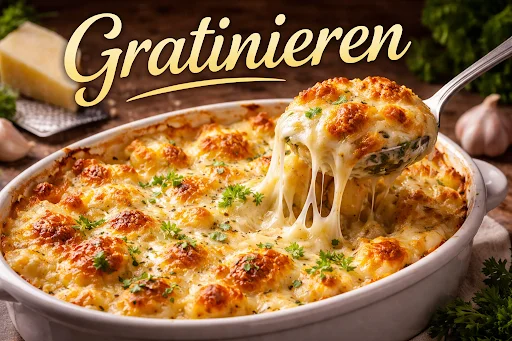
Gratinieren is the technique of browning or crisping the top layer of a dish using high, focused heat — typically from the oven’s upper element or grill. It’s about creating a golden, flavorful crust that contrasts with the tender interior beneath. Think of the irresistible top of a potato gratin, the bubbling golden cheese on baked pasta, or the delicate caramelized sugar on a dessert — all classic results of gratinieren.
In culinary terms, gratinieren is closely related to the idea of überbacken, but it places special emphasis on krustenbildung and finishing with hitze von oben. When done right, gratinieren improves texture, aroma, and flavor in ways that simple baking cannot, helping to textur verbessern and geschmack intensivieren.
Chefs and home cooks love gratinieren because it instantly elevates ordinary ingredients. A golden crust adds visual appeal, a crunchy mouthfeel, and complex roasted notes — the kind that prompt “wow” reactions at the table. It’s an effortless way to turn simple vegetables, fish, or starches into memorable, restaurant-quality dishes.
RELATED: Fiebrigen: History, Meaning & Use
History and Origin of Gratinieren
The French Influence on Gratin Cooking
Although the German word “gratinieren” describes the action in German-speaking kitchens, the technique traces its roots to French cuisine — specifically the classic gratin dishes that emerged in regional French cooking. The verb “gratin” and dishes like gratin dauphinois popularized the idea of baking a dish until a golden crust forms.
French bistros and home cooks perfected the method of layering ingredients with cream, butter, and cheese, then finishing with high heat to encourage browning and röstnoten entwickeln. Over centuries, this method traveled and adapted, becoming a staple technique across Europe and beyond.
Evolution of Gratin Dishes in European Cuisine
From the rustic potato gratin of rural France to elegant vegetable gratins in modern restaurants, the method evolved to include diverse ingredients and cultural adaptations. Cooks began using local cheeses, herbs, and crumbs, and the technique migrated into casseroles, seafood dishes, and even desserts.
As ovens improved and home cooking styles changed, gratinieren became more accessible. The universal appeal of a crisp, flavorful top meant the technique spread into Mediterranean, Germanic, and Anglo cuisines, each putting its signature spin on toppings and sauces.
Gratinieren in Modern Home Cooking
Today, gratinieren is a go-to finishing technique in many home kitchens. Modern ovens often include a dedicated grill function or broiler to make the process fast and reliable. Home cooks use gratinieren to upgrade weeknight meals: a quick sprinkle of cheese on leftover pasta before a few minutes under the grill can transform dinner into something special.
Additionally, with interest in textures and contrast growing among food lovers, gratinieren helps home cooks achieve professional-looking results without complicated techniques. The method is forgiving, adaptable, and immensely rewarding.
The Science Behind Gratinieren
How Heat Creates a Golden Crust
The visual and flavor magic of gratinieren comes from applying intense top heat to the surface of food. Heat causes water to evaporate, surface sugars to concentrate, and fats to melt — this combination produces the crisp, shimmering layer we love. The focused heat source can be the oven’s broiler, the top heating element, or a handheld torch.
As the surface dries and browns, the krustenbildung forms quickly. This crust insulates the interior, helping retain moisture while producing a satisfying crunch. Understanding how heat moves in the oven helps you control browning without burning the interior.
Role of Caramelization in Gratinieren
Caramelization is the breakdown of sugars at high temperatures, producing sweet, nutty, and slightly bitter flavor compounds. When you add a topping containing sugars (like breadcrumbs with a touch of honey or vegetables with natural sugars), karamellisieren under heat deepens the dish’s flavor profile.
Caramelization creates glossy, amber hues and fragrant aromatics — essential for that craveable, golden surface. It’s particularly important when finishing vegetables or desserts, where sugar concentration drives flavor development.
Maillard Reaction and Flavor Development
The Maillard reaction, occurring between amino acids and reducing sugars, produces complex savory flavors and browned pigments. Cheeses and proteins are rich in the necessary components for this reaction, so when you gratinieren with cheese, the Maillard reaction helps röstnoten entwickeln and geschmack intensivieren.
Combining caramelization and the Maillard reaction yields a balanced crust: sweet, savory, and richly aromatic. These chemical processes create the sensory depth that makes gratin dishes so irresistible.
Essential Tools for Gratinieren
Best Oven Types for Gratinieren
A reliable oven with a strong top heat element is ideal for gratinieren. Convection ovens give more even heat distribution, but a dedicated broiler (grillfunktion) or top heating element is essential for crisping tops. Many modern electric ovens provide an upper-element grill setting designed specifically for this purpose.
Gas ovens can also gratinieren well, especially with a close rack position under the flame. If you frequently gratinieren, consider an oven with adjustable broiler intensity and a convection option to fine-tune results.
Oven Racks and Heat Distribution
Rack position matters. For the best hitze von oben you’ll place your dish on the top third of the oven, close enough to the heat source to brown quickly without burning. Use the middle rack for even baking before finishing; move the dish up for a final gratin step.
Proper air circulation prevents hot spots. Avoid overcrowding the oven and give trays room to breathe so the top achieves a uniform golden color.
Gratin Dishes and Baking Trays
Choose ovenproof gratin dishes with low sides to expose more surface area for browning. Materials like ceramic, enameled cast iron, and glass heat evenly and create steady, controlled browning. Metal roasting pans produce a crisper edge but may brown faster, so monitor cooking closely.
Durable baking trays are useful for collecting drips when finishing under the broiler. A perforated tray can improve airflow for extra crispiness in some applications.
Kitchen Torches vs. Oven Grilling
A kitchen torch offers precision and convenience when you want to caramelize small areas (for example, brûléeing sugar or crispening a specific spot). For larger surfaces or whole dishes, the oven’s grill function is more consistent and hands-free.
Torches are excellent for last-minute finishing touches and small projects; ovens are unbeatable for uniform gratinieren of full casseroles or multiple dishes.
How to Gratinieren Properly (Step-by-Step Guide)
Preparing the Food
Start with properly cooked or par-cooked ingredients. For potatoes, thin, uniform slices ensure even cooking; for vegetables, pre-roasting or blanching removes excess moisture so the top crisps instead of steaming. Remove excess liquid from mixtures — a dry surface is crucial for krustenbildung.
Season fully before topping. Salt, pepper, and herbs infuse the interior, while toppings add the finishing character. Balanced moisture and texture enable the topping to crisp without sogginess.
Choosing the Right Toppings
Traditional toppings include grated cheese, breadcrumbs, herb butter, or a mixture. Gratinieren mit Käse is iconic — choose cheeses that melt well and brown attractively (see section 7). Breadcrumbs give crunch; a drizzle of olive oil or butter helps them brown and adds flavor.
Combine toppings for contrast: a layer of béchamel or cream under a cheese-and-breadcrumb mix yields a luscious interior and a crisp top. Small additions, like mustard in crumbs or lemon zest, can geschmack intensivieren subtly.
Setting the Correct Temperature
Use a two-stage approach: cook the dish through at a moderate temperature (e.g., 160–180°C / 320–350°F). For the finishing gratin step, switch to high heat — 200–250°C (400–480°F) or the broiler/grill setting — to quickly create color. The gratinieren temperatur depends on the dish and topping but generally favors intense top heat.
If your oven has a dedicated grillfunktion, use it for final browning, watching closely. For delicate dishes, shorten the high-heat period to avoid drying the interior.
Monitoring the Gratin Process
Gratinieren happens fast. Once under the broiler or upper element, check every 30–60 seconds near the end to prevent burning. Look for a uniform golden color, bubbling cheese, and a slightly crisp edge.
A good strategy is to rotate the dish halfway through the final browning to ensure even color. Remove from heat as soon as the desired shade is reached — carryover heat can continue browning for a minute after your dish is out of the oven.
Best Foods to Gratinieren
Vegetables to Gratinieren
Vegetables like cauliflower, broccoli, asparagus, and root vegetables thrive under a gratin finish. Pre-cook firmly textured vegetables to remove excess water, and use a light béchamel or olive oil base to assist browning. The technique enhances natural sweetness and adds a knusprige schicht.
Vegetable gratins are an excellent way to textur verbessern and introduce roasted flavors without deep frying. They also reheat well and make an elegant side dish.
Meat and Poultry Gratin Recipes
Poultry and thin-cut meats benefit from gratinieren when combined with a sauce or stuffing. Chicken breasts with a parmesan crust or pork chops finished with herb crumbs become juicier and more visually appealing after a quick top-browning step.
Use gratinieren to seal and flavor stuffing or sauces, ensuring the meat underneath remains tender while the surface gains dimension and aroma.
Fish and Seafood Gratin Techniques
Fish fillets and shellfish adapt beautifully to gratinieren, especially when paired with a light cream, herb, and breadcrumb topping. Delicate seafood requires careful timing: a few minutes under high heat is often enough to melt and brown without overcooking the fish.
Seafood gratins offer an elegant, confident presentation — the golden crust complements flaky textures and enhances briny notes.
Pasta and Potato Gratin Dishes
Classic dishes like macaroni gratin and potato dauphinois show the best of gratinieren. Pasta bakes with cheese and béchamel develop a luscious interior and a crisp, golden lid when finished under high heat. Potato gratins become tender and creamy inside with a deeply flavored top.
These comfort-food staples are perfect for using the backofen grillfunktion to achieve deep color and satisfying crunch.
Dessert Gratinieren Ideas
Don’t forget desserts: crème brûlée uses torching to karamellisieren sugar, while fruit gratins can gain a caramelized top that balances acidity with sweet roasted tones. A quick sprinkle of sugar and few minutes under the broiler transform simple fruit into decadent treats.
Dessert gratinieren calls for precision but rewards with dramatic texture and aroma.
Gratinieren with Cheese – The Secret to Perfect Flavor
Best Cheese Types for Gratinieren
Choose cheeses that melt smoothly and brown well: Gruyère, Comté, Emmental, Cheddar, and aged fontina are classics. These cheeses deliver deep röstnoten entwickeln and a velvety melt. Softer cheeses like mozzarella melt beautifully but may not brown as richly on their own.
For a bold top layer, mix a flavorful aged cheese with a milder melting cheese to balance aroma and stretch.
Mixing Cheese for Better Taste
Blending cheeses is a pro move. Use a high-flavor, low-fat, aged cheese (for color and depth) plus a creamy melting cheese for texture. A 50/50 or 60/40 ratio often works: e.g., aged Gruyère with young Comté or sharp Cheddar with mozzarella.
Add a touch of grated Parmesan in breadcrumbs for an extra savory lift — the Parmesan crisps and intensifies flavor while other cheeses provide creaminess.
Cheese Melting Techniques
Shred cheese finely — smaller pieces melt and brown more evenly. Distribute cheese in a thin, even layer to encourage uniform color and avoid a gloopy, oily surface. For best results, add cheese during the final 5–10 minutes of cooking so the interior doesn’t dry out.
If using a sauce like béchamel, fold some cheese into the sauce for internal creaminess, and reserve additional grated cheese for the surface to enable optimal käse schmelzen and browning.
Gratinieren Temperature Guide
Ideal Temperatures for Different Foods
Start by cooking the main dish at a moderate temperature (160–180°C / 320–350°F). For the gratin finish:
- Vegetables and thin seafood: 220–240°C (425–465°F) or broiler for 2–5 minutes.
- Cheese-topped pastas/casseroles: 200–230°C (390–450°F) or broiler for 3–6 minutes.
- Desserts or torching: surface caramelization occurs quickly — monitor at 1-2 minute intervals.
- These ranges ensure rapid color formation without overcooking the interior.
Using Upper Heat (Grill Function)
The backofen grillfunktion or broiler provides concentrated top heat perfect for gratinieren. Preheat the element for a few minutes so it’s at full intensity, then place your dish on a high rack. Keep the oven door slightly ajar only if your oven’s manual recommends it — this can help maintain broiler efficiency in some models.
Positioning and timing are key: start with a slightly lower broil time and add more if needed.
Avoiding Burning or Overcooking
Gratinieren is fast — and forgiving only if watched. To avoid burning, use moderate topping thickness, keep an eye on color development, and rotate the tray if your oven has hot spots. If the top is darkening too quickly, move the dish down a rack or reduce broiler intensity.
For delicate interiors, protect the edges temporarily with foil during the finish, removing it at the very end to crisp the surface.
Common Mistakes When Gratinieren
Using Wrong Temperature Settings
Too low a finishing temperature results in a pale, unappetizing top; too high and you risk rapid burning. Avoid extreme broiler intensity for long periods — aim for short bursts of intense heat to achieve goldbraun backen without drying the dish.
Always test your broiler’s strength on a small sample so you can judge timing.
Adding Too Much Topping
Overloading with cheese or crumbs creates uneven melting and can insulate the interior from heat, preventing proper color. Use balanced quantities: a thin, even layer crisps faster and more attractively.
If you want extra crunch, add an extra sprinkle of crumbs during the last minute under the broiler rather than at the start.
Ignoring Cooking Time
Gratinieren is a finishing touch, not a cooking stage for raw ingredients. Ensure the main components are fully or nearly cooked before browning. Trying to cook raw meat or hard vegetables solely by gratinieren leads to uneven results.
Use two-stage cooking: thorough initial cooking, then quick top-browning.
Poor Heat Circulation
Crowding the oven or using shallow pans that block airflow can lead to patchy browning. Leave room between dishes and avoid stacking, which traps steam and prevents consistent krustenbildung.
Use oven-safe pans sized to allow even exposure to the upper element.
Healthy Gratinieren Tips
Low-Calorie Gratin Alternatives
You can enjoy gratin textures with fewer calories by using low-fat dairy, lighter cheeses, or plant-based alternatives. Swap heavy cream for a light béchamel made with skim milk and a small amount of cornstarch for thickening.
Breadcrumbs can be mixed with ground nuts or whole-grain crumbs for added nutrition and flavor.
Using Vegetables Instead of Heavy Cream
Vegetable-forward gratins rely on natural vegetable moisture and a modest sauce. Cauliflower or zucchini make satisfying bases that don’t need heavy creams. Roasting vegetables prior to layering concentrates flavor and reduces the need for richness.
Finishing with a controlled amount of cheese or a sprinkle of olive oil keeps the dish flavorful without excess calories.
Healthy Cheese Options
Choose cheeses lower in fat but high in flavor — aged Parmesan or Pecorino deliver strong taste in small amounts. Part-skim varieties of mozzarella or reduced-fat fontina can provide melt with fewer calories.
Strategic flavor — a little high-impact cheese goes a long way toward satisfaction.
Gratinieren Recipes for Beginners
Simple Potato Gratin
Thinly slice potatoes, layer with light cream or milk, season, and top with grated cheese and breadcrumbs. Bake at 170–180°C until tender, then finish under the grill until the top is goldbraun and bubbling. This classic is a perfect introduction to layering, timing, and finishing under top heat.
Vegetable Gratin Recipe
Combine blanched broccoli, cauliflower, or mixed vegetables with a light béchamel, transfer to a shallow dish, sprinkle with mixed cheeses and crumbs, then gratinieren under high heat for a quick, elegant side dish. The gratin finish transforms simple vegetables into a centerpiece.
Quick Pasta Gratin
Toss cooked pasta with tomato or béchamel sauce, fold in 50% melting cheese, top with additional cheese and a few crumbs, then bake at 180°C until warmed through. Finish with 3–5 minutes under the broiler for a decadent, crunchy top.
Advanced Gratinieren Techniques
Layered Gratin Dishes
Layering offers depth: thinly slice ingredients for even cooking, alternate creams and cheeses, and stagger textures. Layered gratins — such as aubergine or potato stacks — respond well to controlled, staged cooking before final gratinieren.
Professional Restaurant Methods
Restaurants often use preheated salamanders (commercial broilers) to achieve rapid, even coloring. Chefs may also brush tops with butter or oil to encourage consistent browning and use a combination of cheeses for optimal Maillard reactions and caramelization.
Flavor Enhancement Tricks
Add aromatics (garlic, thyme, nutmeg) to the base, toast crumbs with herbs for extra röstnoten entwickeln, or sprinkle citrus zest post-gratin to brighten flavors. Small finishing salts or vinegars can contrast the richness beautifully.
Gratinieren in Different Cuisines
European Gratin Dishes
From French gratin dauphinois to Italian baked pastas, Europe showcases many gratin traditions. Each culture tailors toppings to local cheeses and herbs, producing signature regional flavors.
Modern Fusion Gratin Recipes
Modern cooks fuse flavors — miso breadcrumbs, za’atar and halloumi, or chipotle-spiced cheese — showing how gratinieren adapts to contemporary palates while preserving textur verbessern.
Home Cooking Adaptations
At home, gratinieren can rescue leftovers or reimagine classics with seasonal produce. It’s an approachable technique that rewards experimentation and creativity.
Benefits of Gratinieren in Cooking
Improves Taste and Texture
Gratinieren enhances both taste and mouthfeel. The combination of krustenbildung, karamellisieren, and Maillard-derived notes creates immediate sensory appeal, improving simple ingredients dramatically.
Enhances Food Presentation
A golden top signals care and craftsmanship; it makes dishes look appealing and appetizing — perfect for entertaining or elevating everyday meals.
Adds Nutritional Value
While gratin dishes can be indulgent, they can also be balanced. Incorporating vegetables, lean proteins, and measured cheeses lets you create nutrient-dense gratins that satisfy without excess.
RELATED: Mac Računala: Buy, Use & Maintain Guide
Frequently Asked Questions
What Does Gratinieren Mean?
Gratinieren means to finish a dish with intense top heat to create a golden, crispy crust. It’s the German verb for the action commonly known in French cuisine as creating a gratin.
Which Foods Are Best for Gratinieren?
Vegetables, fish, poultry, pasta, and potatoes are classic candidates. Desserts can also benefit from careful caramelization or torching.
Is Gratinieren Healthy?
It depends on ingredients. Gratinieren itself is a technique; you control healthfulness through choice of fats, cheeses, and portion sizes. Use lighter bases or more vegetables to keep it balanced.
How Hot Should I Gratinieren?
Finish under the grill or at 200–250°C (400–480°F) depending on the dish. Monitor closely; gratinieren is quick.
Can I Use a Torch Instead of the Oven?
Yes — torches are great for small areas or desserts. For larger dishes, the oven’s grillfunktion gives more even results.
Summary
Gratinieren is an essential, versatile technique that transforms food with quick, focused heat. It’s a skill that multiplies the impact of everyday ingredients, delivering contrast, aroma, and a luxurious finish.